Source Independent Diesel Heater for Caravan, RV, and Truck
Find 30 listings for the independent diesel heater for caravan, RV, and truck applications. Compare specifications including power, voltage, and fuel consumption from suppliers in China to select the right unit for your needs.
Key considerations
Products List




Comprehensive Sourcing Guide
Sourcing Guide for Independent Diesel Heaters for Caravan Applications
Understanding Independent Diesel Heater Architecture
When sourcing an independent diesel heater for caravan applications, buyers must first distinguish between integrated systems and standalone units designed for specific vehicle types. The core keyword "independent" implies a unit that operates separately from the vehicle's engine cooling system, drawing its own fuel supply to generate heat. This architectural choice is critical for caravans and mobile living spaces where engine runtime is intermittent or non-existent. The observed market data indicates a divergence in driving modes, with some units categorized as "Non-independent" while others are explicitly "Independent." For a caravan, the independent configuration is the only viable option to ensure consistent heating during stationary periods without relying on a running engine.
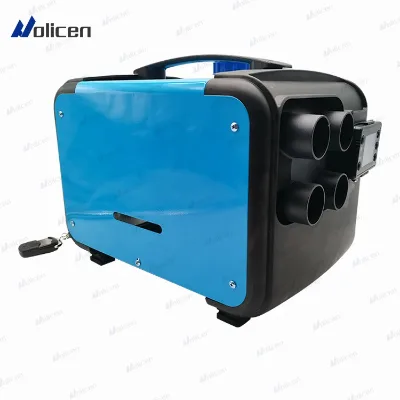
The physical dimensions of these units vary significantly based on their intended capacity and internal component layout. Observed specifications list standard sizes ranging from compact units measuring approximately 372425cm to larger industrial-grade models reaching 626322340mm. Buyers should verify that the selected unit's footprint fits within the designated installation space of the caravan, which is often constrained by floor plans and existing utility lines. The shell material is predominantly plastic, offering a balance between weight reduction and thermal resistance, though the specific grade of plastic must be verified for heat tolerance. The color options observed include Red and Black, All Black, and Grayblack, which are primarily aesthetic choices but may also indicate different casing materials or coating processes.
Technical Specifications and Performance Metrics
The performance of an independent diesel heater is defined by its power output, fuel consumption, and temperature control capabilities. The supply chain data reveals a wide spectrum of power ratings, ranging from 2-5kw for smaller units to 10kw and even 16.3kw for high-capacity models. For a standard caravan, a unit in the 2-8kw range is often sufficient, while larger expedition vehicles or those operating in extreme climates may require the 10kw+ options. The voltage compatibility is another critical technical parameter; observed units support 12V, 24V, and 220V inputs, allowing for flexibility in power sources ranging from vehicle batteries to shore power connections.
Fuel consumption rates are a primary operational cost driver. Data indicates fuel consumption figures such as 1.05kw/H or 1.05kg/H, with some units listing a consumption of 0.2L/H. It is essential for buyers to understand that these figures are highly dependent on the operating temperature and the specific fuel type, which is typically Diesel or Diesel Oil. The temperature range capability is another vital specification, with some units claiming a range of -40 to -50 degrees Celsius, ensuring functionality in harsh winter environments. The heating method is consistently listed as "Air Heating," which involves blowing heated air through ducts to warm the interior space. The heating area coverage varies, with some models rated for 25-30 square meters, a metric that should be cross-referenced with the caravan's interior volume and insulation quality.
Compliance, Certification, and Safety Standards
In the realm of mobile heating systems, compliance with international safety and environmental standards is non-negotiable. The observed product attributes frequently list certifications such as CE, ISO, and RoHS. The CE mark indicates conformity with health, safety, and environmental protection standards for products sold within the European Economic Area, which is a common destination for caravan markets. ISO certification suggests adherence to international management system standards, while RoHS compliance ensures the product is free from specific hazardous materials. Buyers must verify that the specific unit they are purchasing carries these certifications, as the presence of one does not guarantee the others.
Safety standards also extend to the physical construction and operational limits of the heater. The observed standard dimensions, such as 482153cm or 388210180mm, serve as reference points for manufacturing consistency, but the actual safety standards governing combustion, exhaust gas handling, and electrical insulation must be explicitly confirmed. The "Universal Car" application specification suggests broad compatibility, yet buyers should ensure the unit meets the specific regulatory requirements of the country where the caravan will be registered and operated. The "High-Quality" attribute observed in listings is a qualitative claim that must be substantiated by the aforementioned certifications and third-party test reports rather than accepted as a standalone fact.
Cost Drivers and Procurement Economics
The cost of sourcing an independent diesel heater is influenced by a complex interplay of power output, certification status, and packaging requirements. The observed price range in the market spans from 45 to 925 USD, a variance that reflects differences in power capacity, build quality, and included accessories. Lower-priced units typically fall into the 2-5kw range with basic manual control modes, while higher-priced models often feature electronically controlled pneumatic adjusting systems, higher power outputs (10kw-16.3kw), and more robust packaging.
The Minimum Order Quantity (MOQ) is another significant economic factor. The data shows an MOQ range of 1 to 20 units, with many suppliers offering an MOQ of 1, which is highly favorable for individual caravan owners or small-scale refurbishers. However, bulk procurement may unlock better pricing tiers. Packaging also plays a role in the final landed cost; options include "Neutral Packaging," "Carton Packing," or generic "Package" designs. Neutral packaging is often preferred for private labeling or to reduce shipping volume, but it may offer less protection during transit compared to specialized carton packing. Buyers should calculate the total cost of ownership, including shipping, customs duties, and potential installation labor, rather than focusing solely on the unit's base price.
Typical Applications and Installation Considerations
Independent diesel heaters are designed for a variety of mobile applications, with the caravan being a primary use case. The observed "Matching Models" specification includes Pickup Trucks, Small Containers, Light Trucks, and Cranes, indicating the versatility of these units across different vehicle classes. For caravans, the "Universal Car" designation implies that the unit can be adapted to various chassis and interior layouts. The heating area of 25-30 square meters suggests suitability for medium to large caravans, provided the insulation is adequate.
Installation requires careful planning regarding the fuel supply, exhaust routing, and air intake. The "Fuel Consumption" and "Oil Consumption" data highlight the need for a reliable fuel tank and filtration system. The "Temperature Adjustable Area" of four areas suggests that some advanced models offer zoned heating, allowing users to direct warmth to specific sections of the caravan. The control mode, observed as both "Manual" and "Electronically Controlled Pneumatic Adjusting," dictates the user interface complexity. Electronic control offers precise temperature regulation and remote operation capabilities, which are highly desirable for caravan comfort. The "Weight" of the units, ranging from 7.5kg to 16kg, is a critical factor for vehicle weight distribution and payload capacity, especially for smaller caravans where every kilogram counts.
Supplier Evaluation and Quality Assurance
Evaluating suppliers for independent diesel heaters requires a focus on origin, production standards, and quality assurance processes. The observed product origins are primarily located in Shandong, Dezhou, and generally within China. While these regions are known for manufacturing, buyers should verify the specific factory's capabilities and history. The "Quality: High-Quality" attribute is a common claim, but it must be validated through the supplier's quality control protocols and the presence of valid certifications like CE and ISO.
The "Customization: Available" attribute indicates that many suppliers are willing to tailor products to specific buyer requirements, such as custom voltage configurations or specific mounting brackets. This flexibility is a significant advantage for caravan owners with unique installation needs. However, customization can impact lead times and costs. Buyers should also inspect the "prod_packing" details to ensure the product is shipped in a manner that prevents damage during transit. The "Neutral Packaging" option is common for B2B transactions where branding is not required, but it should not compromise the protective integrity of the packaging.
Long-Term Procurement and Maintenance Strategy
Long-term success with independent diesel heaters depends on the availability of spare parts, the durability of the unit, and the ease of maintenance. The "Motor Power" of 105W and the specific "Fuel" type (Diesel) are key factors in determining the operational lifespan and maintenance schedule. Buyers should inquire about the expected service life of the combustion chamber and the blower motor, as these are the components most prone to wear. The "Temperature" rating of 30 degrees mentioned in the data likely refers to a specific operational threshold or ambient limit, which should be clarified with the supplier to ensure it aligns with the user's climate conditions.
Procurement strategies should also account for the "Fuel Consumption" efficiency over time. Units with lower consumption rates, such as 0.2L/H, offer significant long-term savings, especially for caravans used for extended periods away from fuel stations. The "Control Mode" evolution from manual to electronic control also impacts long-term usability, as electronic systems often include diagnostic features that simplify troubleshooting. Finally, buyers should consider the "Standard" dimensions and "Specification" details when planning for future upgrades or replacements, ensuring that the new unit will fit the existing installation infrastructure without requiring extensive modifications. By focusing on these long-term factors, buyers can secure a reliable heating solution that enhances the comfort and utility of their caravan for years to come.
FAQs
What power options are available for independent diesel heaters?
Available power ratings range from 2 to 16.3kw depending on the specific model selected. Smaller units typically operate between 2 and 8kw, while larger expedition models can reach up to 16.3kw to handle extreme climates.
Can these heaters operate in extremely cold temperatures?
Yes, specific models are designed to function in temperatures as low as -40 to -50 degrees Celsius. This capability ensures reliable heating performance even during harsh winter conditions in caravan applications.
Which certifications should I look for in a reliable unit?
Reputable units often carry CE, ISO, and RoHS certifications to ensure safety and environmental compliance. These marks indicate conformity with health standards and restrictions on hazardous materials for international markets.
How much fuel does a typical 10kw heater consume per hour?
Fuel consumption for 10kw models is typically listed at 1.05kg per hour or 1.05kw per hour. Some efficient units may consume as little as 0.2 liters per hour depending on the operating temperature.
What is the minimum order quantity for purchasing these heaters?
Many suppliers offer a minimum order quantity of just 1 unit, which is ideal for individual caravan owners. However, some vendors may require orders of up to 20 units for specific bulk pricing tiers.
Where are the primary manufacturing locations for these products?
Most products originate from Shandong, Dezhou, and other regions within China. These locations are established hubs for manufacturing mobile heating systems and offer various customization options for buyers.